Authentic handcrafted Bandhani Gharcholas dispatched directly from Gujarat. Insured express delivery with tracking across India & 50+ countries. Dismiss
Connect With the Essence of Tradition: Your Guide to Official Gharchola Platforms
The Gharchola is not just an ensemble; it is a sacred heritage, a symbol of auspicious beginnings, and a celebration of timeless Indian craftsmanship. Woven with love, tradition, and intricate artistry, our authentic handloom drapes carry the blessings of generations.
As our community continues to grow, we want to ensure you always have seamless access to our genuine collections, authentic updates, styling inspirations, and dedicated customer support.
To help you stay protected from counterfeit sellers and unofficial channels, we have curated the complete directory of our official Gharchola platforms below.
🛍️ Shop Genuine Handcrafted Elegance
Looking to add an authentic bridal or festive Gharchola to your trousseau? Explore our curated catalog directly from our official portal:
Immerse yourself in behind-the-scenes weaving stories, bridal styling ideas, new arrivals, and vibrant festive collections across our official social channels:
Watch craftsmanship documentaries, detailed saree draping guides, and video lookbooks.
📞 Dedicated Customer Support & Styling Assistance
Have questions about customization, international shipping, or fabric care? Need help choosing the perfect drape for your special day? Our team is always here to assist you.
Please ensure all your inquiries, orders, and interactions are made exclusively through the links and contact information verified above. We take pride in preserving the purity of our craft and delivering only authentic, premium-quality pieces to your doorstep.
Thank you for making Gharchola a part of your most cherished celebrations!
A Symphony of Hues: Exploring the Rich Color Palette of Gharchola Sarees
Rooted deeply in Gujarati and Rajasthani wedding traditions, the Gharchola—literally translating to “the garment of the new home”—is far more than mere fabric. Characterized by its signature woven grid checks (chauk) filled with intricate Bandhani tie-dye motifs and shimmering zari work, it carries blessings, heritage, and auspicious beginnings.
Historically, a bride’s Gharchola was almost exclusively seen in ceremonial reds and maroons. However, modern artisanal collections—like the curated range found at Gharchola.com—have reinvented this timeless drape. Today, traditional craftsmanship blends with contemporary shades, offering an expansive spectrum for every ritual, celebration, and personal taste.
1. The Sacred Classics: Reds, Maroons & Rustom Shades
The foundational soul of the Gharchola will always belong to the red family, symbolizing prosperity, fertility, and marital bliss:
Blood Red & Scarlet: The hallmark bridal color, illuminated with gleaming real zari or naksi zari checks filled with delicate peacock (mor), elephant (haathi), or floral Bandhej dots.
Choco Maroon & Deep Rust: A deeper, richer alternative to standard red. These tones provide dramatic contrast against metallic gold zari borders, making them a preferred choice for reception evenings and winter weddings.
2. The Fresh & Auspicious: Greens & Parrots
In traditional Indian wear, green denotes harmony, growth, and new life. In Gharchola weaving, green tones bring an undeniable royal elegance:
Bottle Green: Evoking regal heritage, bottle green pure Gaji silk Gharcholas reflect light with a lustrous sheen, contrasting vividly with yellow and white Bandhani dots.
Lime Parrot & Green-Parrot Blends: Youthful, energetic, and playful, these shades are increasingly popular for daytime festivities, haldi-mehendi ceremonies, and Sangeet nights.
3. Vibrant Sunbursts: Yellows & Mustards
Yellow is intrinsically linked to sanctity and joy across Indian festivities.
Mustard & Golden Hues: Often paired with contrasting peacock blue or deep maroon borders, mustard Gharcholas create a striking ethnic statement.
Dual-Toned Parrot-Yellow: Featuring subtle red-and-white micro rai bandhani dots, this shade brings a radiant, festive glow under wedding lights.
4. The Contemporary Pastels & Cool Tones
Breaking away from strictly traditional norms, recent collections embrace a softer, modern aesthetic:
Aqua, Cool Sky & Dreamy Sky: Cool blue tones paired with gold or silver zari grids offer an ethereal charm—ideal for brides and guests who prefer understated sophistication.
Sky Purple & Brinjal (Aubergine): Deep jewel-toned purples and lighter lilac accents lend a modern, high-fashion edge to traditional Gaji silk checks.
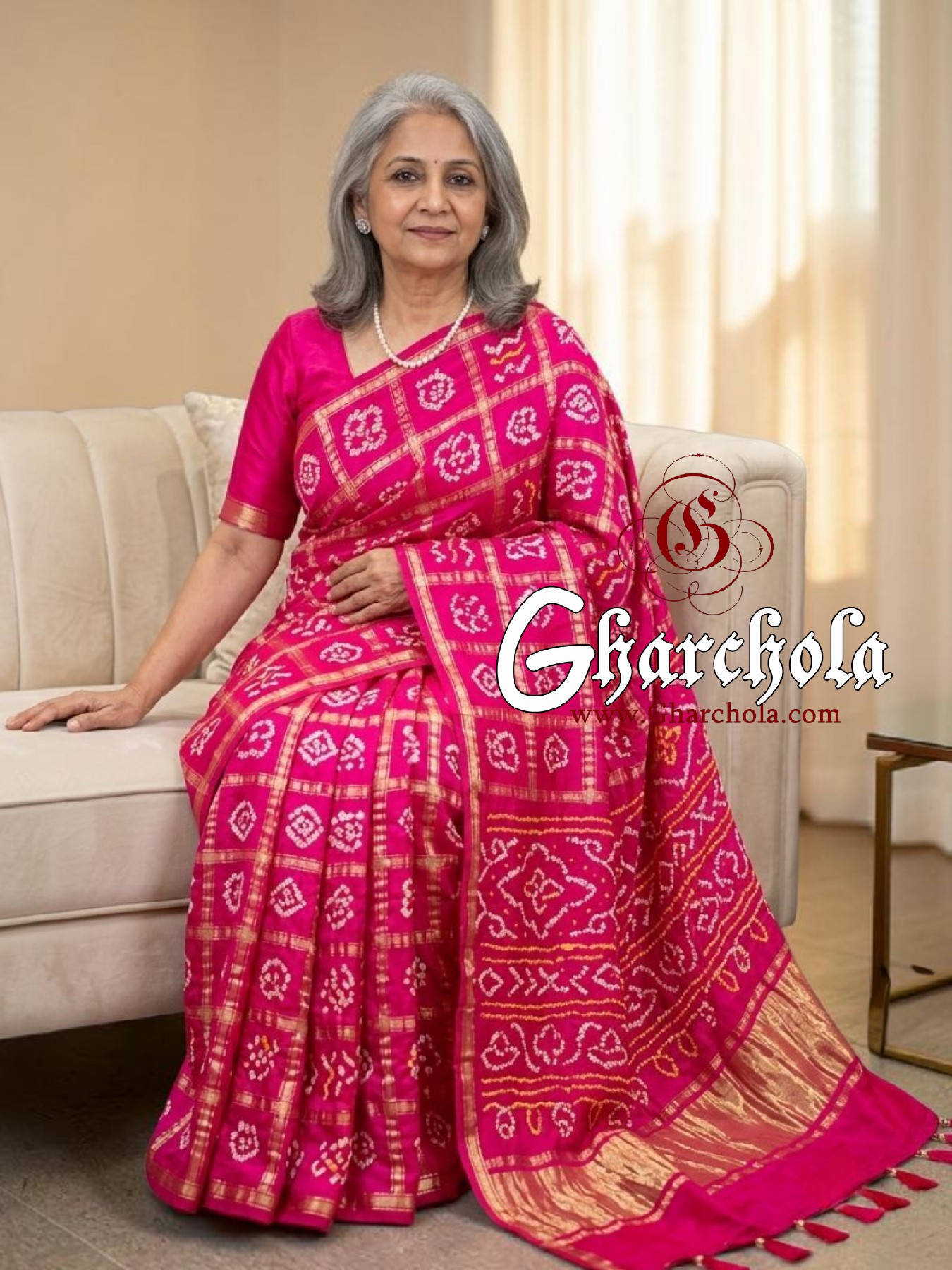
Rani Pink & Magenta: Sitting comfortably between playful and classic, rich fuchsia tones offer the warmth of red with a fresher, romantic aesthetic.
5. Modern Contrasts & Bold Non-Traditionals
Color PaletteSignature AestheticIdeal Occasion Two-Tone Contrasts(e.g., Red-Green, Peacock-Mustard)Contrasting palav and body create visual dimension and emphasize the artisanal gridwork.Wedding Ceremonies, Festive Pujas Monochrome & Deep Tones(Extreme Black, Black-Silver)Edgy and bold, defying conventional bridal norms with striking zari luster against pure dark silk.Cocktail Evenings, Sangeet Parties Warm Duos(Pink-Orange, Orange-Yellow)Reminiscent of sunset palettes; warm, photogenic, and intensely vibrant.Daytime Muhurat, Haldi Celebrations
Choosing Your Shade
Whether honoring ancestral roots in a classic Blood Red Naksi Zari drape or stepping into celebration with a breezy Aqua or Brinjal Gaji Silk piece, the expanding color wheel of Gharchola sarees ensures that every wearer finds a shade that resonates with her personal style while keeping the heritage alive.
gharchola.com : ઓરિજિનલ બાંધણી ઘરચોળાના વિશ્વસનીય ઉત્પાદક અને વિશેષજ્ઞ
ગુજરાતી લગ્નવિધિ અને સંસ્કૃતિમાં ‘ઘરચોળા’ (Gharchola) માત્ર એક પોશાક નથી, પરંતુ આશીર્વાદ, સન્માન અને પેઢી દર પેઢી ચાલી આવતી પરંપરાનું પવિત્ર પ્રતીક છે. લગ્નમંડપમાં સાસરી પક્ષ તરફથી વધુને આપવામાં આવતી આ ભેટ તેના નવા ઘરમાં ઉષ્માભર્યા પ્રવેશ અને સૌભાગ્યનું સૂચક બને છે.
પરંપરાગત હસ્તકલા અને શુદ્ધ ગુણવત્તાના સંગમ સાથે Gharchola.com ઓરિજિનલ બાંધણી ઘરચોળાનું સીધું ઉત્પાદન (Manufacturing) કરી ભારતીય હેરિટેજને ઘર-ઘર સુધી પહોંચાડી રહ્યું છે.
ઘરચોળાનો સાચો અર્થ અને પવિત્ર મહત્ત્વ
‘ઘરચોળા’ શબ્દ બે શબ્દોના મેળાપથી બન્યો છે: ‘ઘર’ (સાસરીનું નવું ઘર) અને ‘ચોળા’ (વસ્ત્ર કે પોશાક).
સૌભાગ્યનું પ્રતીક: લાલ, મરૂન અને સિંદૂરી જેવા શુભ રંગોમાં તૈયાર થતું આ વસ્ત્ર અખંડ સૌભાગ્યનું પ્રતીક છે.
પરંપરાગત ગ્રીડ ડિઝાઇન: ઘરચોળાની મુખ્ય ઓળખ તેના સોનેરી કે રૂપેરી ઝરીના ચોરસ ખાના (Grid Pattern) છે. શાસ્ત્રોક્ત પરંપરા અનુસાર તે બાર બાગ (૧૨ ખાના) અથવા બાવન બાગ (૫૨ ખાના)ની વિશેષ ભાતમાં વણાય છે.
પવિત્ર મોટિફ્સ: ઝરીના દરેક ચોરસ ખાનામાં હાથી, મોર, પોપટ, કળશ અને પાનની હસ્તનિર્મિત બાંધણી ભાત ગૂંથવામાં આવે છે, જે સમૃદ્ધિ દર્શાવે છે.
હસ્તકલાનું નિર્માણ: કઈ રીતે બને છે અસલ બાંધણી ઘરચોળું?
સાચું બાંધણી ઘરચોળું તૈયાર કરવું એ મહિનાઓની ધીરજ અને કુશળ કારીગરોની મહેનતનું પરિણામ છે:
શુદ્ધ તાણા-વાણાનું વણાટ: શુદ્ધ ગજી સિલ્ક (Pure Gaji Silk), જોર્જેટ કે કોટન કાપડ પર ઝરીના તારથી ચોરસ ગ્રીડ હાથસાળ દ્વારા વણવામાં આવે છે.
બારીક બાંધણી (Tie-Dye): વણેલા કાપડ પર પરંપરાગત ભાત દોરી વડે નાના-નાના દાણાઓમાં અત્યંત બારીકાઈથી બાંધવામાં આવે છે.
કુદરતી રંગકામ (Dyeing): જામનગર અને કચ્છના જાણીતા કારીગરો દ્વારા કાપડને પરંપરાગત રીતે પાકા રંગોમાં રંગવામાં આવે છે, જે તેની ચમક વર્ષો સુધી અકબંધ રાખે છે.
ફિનિશિંગ: ગાંઠો ખોલ્યા બાદ સોનેરી નકશી ઝરી અને રાઈ બાંધણીનો અદ્ભુત વૈભવ ખીલી ઊઠે છે.
ઓરિજિનલ ઘરચોળા માટે Gharchola.com શા માટે શ્રેષ્ઠ પસંદગી છે?
વચ્ચેના કોઈ પણ વચેટિયા વગર સીધા ઉત્પાદક પાસેથી ખરીદી કરવાનો અનુભવ Gharchola.com પૂરો પાડે છે:
૧૦૦% ઓરિજિનલ અને હેન્ડમેડ: કોઈ મશીન પ્રિન્ટ નહીં; શુદ્ધ હસ્તનિર્મિત બાંધણી અને અસલ ઝરીનું કામ.
ગ્લોબલ ડિલિવરી: વિશ્વભરમાં વસતા દરેક ગુજરાતી પરિવાર સુધી અસલ પરંપરાની સુરક્ષિત પહોંચ.
ઘરચોળાની સ્ટાઇલિંગ ટિપ્સ
લગ્નના ફેરા વખતે પાનેતર સાથે સીધા પલ્લુની ગુજરાતી ઢબે પહેરાતું ઘરચોળું શાહી લુક આપે છે. આ ઉપરાંત, પરંપરાગત કુંદન, જડતર કે એન્ટિક ગોલ્ડ જ્વેલરી સાથેનું કોમ્બિનેશન ઘરચોળાના વૈભવને બેવડાવી દે છે. આધુનિક સમયમાં ઘરચોળા દુપટ્ટાને પ્લેન રો-સિલ્ક લહેંગા કે અનારકલી સૂટ સાથે પણ ખૂબ જ સુંદર રીતે સ્ટાઇલ કરી શકાય છે.
તમારા જીવનના સૌથી યાદગાર દિવસ માટે અથવા કૌટુંબિક ઉત્સવો માટે પરંપરાગત, અસલ અને શુદ્ધ બાંધણી ઘરચોળાની પસંદગી કરવા માટે આજે જ Gharchola.com ની મુલાકાત લો.
Timeless Tradition: Discover Handcrafted Gharchola Sarees at Flat 70% Off
Few traditional Indian textiles capture royal heritage, emotional sentiment, and artisanal mastery quite like the Gharchola saree. Historically gifted to brides by their new families as a warm welcome home, the Gharchola represents an enduring legacy of blessings, prosperity, and timeless style. For a limited time, you can bring home these heirloom treasures during the Exclusive Mega Sale at Gharchola.com, featuring an unprecedented Flat 70% OFF sitewide.
What Makes an Authentic Gharchola Saree Unique?
Originating in the vibrant weaving clusters of Gujarat, an authentic Gharchola is celebrated for its dual artistry: weaving and tie-dyeing. The Sacred Zari Grid: Every authentic Gharchola is defined by a grid-patterned body crafted from gold or silver zari threads. These grids, traditionally arranged in 52 (Bavan Baug) or 9 (Nau Kadi) squares, form the canvas for sacred motifs like peacocks, florals, and paisleys.
Handcrafted Bandhani Artistry: Within each woven zari square, master artisans meticulously tie and dye the fabric using fine threads to form intricate Bandhej dots (bundis).
Pure Luxurious Fabrics: Woven using pure Gaji silk, high-grade georgette silk, and fine cottons, offering a regal drape paired with effortless comfort.
Why Invest During the Gharchola.com 70% Off Sale?
Artisanal weaves are an investment in generational elegance. With our direct-from-artisan pricing and limited-time offer, elevating your festive and bridal collection has never been more accessible: Direct-from-Weaver Craftsmanship: Each piece is ethically crafted by traditional artisans, ensuring 100% genuine weave and dye work.
Unbeatable Value: Enjoy a complete 70% discount on premium wedding Gharchola sarees, dupattas, and festive drapes. Heirloom Longevity: Crafted from durable pure silks and rich zari, these pieces are designed to be passed down through generations.
How to Style Your Gharchola for Festivals and Weddings
The Traditional Gujarati Drape: Pleat the saree pallu to fall gracefully over the front right shoulder, letting the intricate zari checks and rich pallu take center stage. Modern Minimalist Accent: Contrast a heavily patterned red or rani pink Gharchola with a clean, structured contemporary raw silk blouse in gold or emerald green.
Statement Jewelry Pairing: Complete the ensemble with antique temple jewelry, polki chokers, or classic jadau pieces to accentuate the warm gold zari.
Shop the Mega Sale Today at Gharchola.com High-demand heirloom sarees sell out quickly during festive sales. Explore the curated catalog at Gharchola.com to secure your favorite handcrafted drape before stocks run out.
Explore the Collection: Visit Gharchola.com Exclusive Discount: Flat 70% Off automatically applied or available at checkout
Direct Assistance: Message via WhatsApp or Instagram @Gharchola for styling queries and personalized order support
When it comes to quintessential Indian bridal wear, few garments carry the spiritual weight, cultural reverence, and sheer magnificence of the Gharchola Saree. Rooted in the regal heritage of Gujarat and Rajasthan, the word Gharchola literally translates to “clothing for the new home”—a ceremonial gift presented by the groom’s family to welcome the bride with blessings, warmth, and love.
Today, modern brides across India and the globe are redefining traditional bridal attire by seeking out authentic hand-tied Bandhani on rich Gaji Silk. Whether you are planning your wedding ensemble or building a heritage heirloom collection, here is everything you need to know about finding the best Gharchola sarees in India at Gharchola.com.
What Makes a True Gharchola Saree Unique?
Unlike a standard saree, an authentic Gharchola is instantly recognizable by its distinct structural grid pattern. The fabric is woven into grid checks (chowkads) using luxurious gold or silver Zari or Naksi threads. Within each woven square, master artisans hand-tie delicate Bandhani (tie-dye) dots to create traditional motifs such as elephants, peacocks, flowers, or sacred geometric symbols.
Key Characteristics of Premium Gharcholas:
The Fabric Base: High-grade 100% Pure Gaji Silk offers a glossy sheen, sturdy drape, and incredible durability.
The Bandhani Technique: Fine Rai Bandhani (tiny, precise hand-tied dots) crafted by traditional artisan communities.
The Zari Weave: Premium Naksi Zari or Real Zari framing each grid square.
Top Gharchola Saree Styles for Every Occasion
1. Pure Gaji Silk Bandhani Gharchola Saree with Naksi Zari
For the traditional bride, nothing compares to the rich texture of pure Gaji Silk paired with Naksi Zari work. The combination of dense hand-tied Bandhani and intricate zari gridlines gives this piece a royal presence.
Best For: Wedding drapes, Pheras, and main wedding rituals.
Why Choose It: It provides a flawless drape, subtle natural silk sheen, and timeless appeal that lasts across generations.
2. Modern Pastel & Off-Beat Gharchola Colors
While traditional Gharcholas are crafted in auspicious shades of red, maroon, and green, modern brides are opting for jewel tones and soft hues such as Brinjal, Aqua, Rani Pink, and Sky Purple.
Best For: Receptions, Sangeet functions, and luxury festive galas.
Why Choose It: Unique colors offer a contemporary twist without losing traditional roots.
3. Real Zari & Heavy Traditional Motif Gharcholas
Crafted for grand heirloom collections, these sarees feature intricate ancient motifs—such as Hathi (elephants), Mayur (peacocks), and Kalash—hand-tied inside every single Zari square.
Best For: Traditional Gujarati & Rajasthani Bridal Looks.
Why Choose It: Represents the pinnacle of handloom craftsmanship.
Product Spotlight: Pure Gaji Silk Bandhani Gharchola Saree
If you are looking for the perfect blend of tradition and craftsmanship, our signature piece stands out:
Fabric: 100% Pure Gaji Silk
Dimensions: Full Saree length of 6.5 Meters (includes running blouse piece) with a 44-Inch Width
Work: Fine Rai Bandhani hand-tied by skilled Khatri artisans with rich Naksi Zari Grid Weave
Customization:Free Color Customization Available—choose your dream palette to match your wedding theme!
Care:Dry Clean Only to preserve pure silk and fine zari luster
How to Style Your Gharchola Saree
The Classic Bridal Look: Pair a red or maroon Gaji Silk Gharchola with a traditional white and red Panetar saree. Wear the Gharchola as a shoulder or head drape (Odhani) during rituals.
Contemporary Elegance: Style a single-tone Gharchola saree with an embroidered contrast blouse and temple jewelry for a refined reception look.
Dupatta Drapes: Layer a Gaji Silk Gharchola Dupatta over an earthy silk lehenga for pre-wedding functions.
Why Buy Authentic Gharcholas from Gharchola.com?
At Gharchola.com, we work directly with artisan communities to bring you authentic, ethically crafted Bandhani and Gharchola textiles.
100% Pure Handloom Fabrics: Premium Gaji Silk base for genuine luster and long-lasting quality.
Bespoke Customization: We offer Free Color Customization on select pieces to fulfill your exact bridal vision.
Handcrafted Excellence: Every dot is individually tied by hand, preserving centuries-old Indian heritage.
FAQs About Gharchola Sarees
Q1: What is the ideal width and length of a Gharchola Saree?
A standard high-quality Gharchola saree measures 6.5 meters in length (including an unstitched running blouse piece) with a standard width of 44 inches.
Q2: How should I care for my Pure Gaji Silk Gharchola?
Because Gaji Silk and Naksi Zari are delicate natural textiles, always Dry Clean Only. Store the saree wrapped in a breathable muslin fabric away from direct sunlight.
Q3: Can I customize the color of my Gharchola saree?
Yes! At Gharchola.com, we provide free color customization options so you can personalize your saree to your preferred wedding aesthetic.
Ready to Find Your Dream Gharchola?
Explore our full collection of Pure Gaji Silk Bandhani Sarees, Naksi Zari Gharcholas, and Bridal Dupattas at Gharchola.com today!
When it comes to bridal elegance and Gujarati heritage, few garments command as much reverence as a Bandhani Gharchola Saree. Woven with tradition, sacred geometry, and vibrant tie-dye artistry, the Gharchola isn’t just an outfit—it is a cherished heirloom.
If you are looking to elevate your ethnic wardrobe or searching for that perfect wedding ensemble, the ultimate showstopper has arrived: Naksi Jari Pure Gaji Silk Bandhani Sarees.
Let’s dive into why this iconic weave is capturing hearts worldwide and how you can style it for your biggest celebrations.
What Makes Naksi Jari & Gaji Silk So Special?
A traditional Gharchola is identified by its grid pattern (Chowks), which symbolizes auspicious blessings for new beginnings. However, combining Pure Gaji Silk with Naksi Jari takes this timeless piece into a league of its own.
Pure Gaji Silk: Known for its luxurious weight, natural glossy sheen, and fluid drape, Gaji silk elevates every color fold. It holds handcrafted tie-dye colors with incredible richness.
Intricate Naksi Jari: Unlike basic flat zari threads, Naksi (Nakshi) embroidery features intricate, raised gold patterns woven directly into the gridlines. The result? A dimensional, shimmering finish that reflects light magically during evening rituals and weddings.
Authentic Hand-Tied Bandhej: Master craftsmen meticulously tie thousands of tiny knots before precision-dyeing the fabric, creating traditional motif patterns inside each zari grid.
3 Reasons You Need This Saree in Your Collection
1. Timeless Bridal & Ritual Elegance
Whether it’s a wedding pheras ceremony, Gruh Pravesh, or a festival like Diwali, the auspicious red, maroon, and green shades of a Naksi Jari Gharchola carry unmatched cultural grace.
2. Free Color Customization
Dreaming of a bespoke hue for your wedding theme? At Gharchola.com, you aren’t limited to standard off-the-shelf colors. Customize your saree to match your exact vision—from traditional royal reds to modern jewel tones and soft bridal hues.
3. Complete Handcrafted Quality
Each piece comes crafted in generous standard dimensions (6.5 meters total length with matching unstitched blouse piece and a 44-inch width) to ensure a royal, effortless drape for all body types.
How to Style Your Naksi Jari Gharchola
The Classic Bridal Drape: Drape the saree in the traditional Gujarati style with the pallu brought over the right shoulder to proudly display the intricate Naksi Jari grid patterns across your chest.
Jewelry Pairing: Highlight the rich gold zari by pairing it with traditional Kundan, Polki, or Temple gold jewelry.
Blouse Customization: Experiment with high-neck zardozi blouses or keep it classic with the included matching Gaji silk blouse fabric.
Ready to Claim Your Heirloom Piece? (Flat 70% OFF Limited Sale!)
Authentic handwoven heritage doesn’t have to break the bank. For a limited time, explore our exclusive hand-crafted collection featuring heavy gold zari borders, pure silk drapes, and bespoke color options at an extraordinary 70% OFF discount.
What makes a Gharchola from Gharchola.com so special? It is the sheer amount of human effort and patience woven into every single thread.
Here is an engaging, storyteller-focused blog post for Gharchola.com that highlights the heritage, human touch, and meticulous process behind crafting an authentic Gharchola saree.
The Craftsmanship Behind a Gharchola Saree: A Labor of Love
In an era of fast fashion and automated looms, there are few garments in the world that demand as much patience, skill, and devotion as an authentic Gharchola Saree.
Originating from the royal heartlands of Gujarat and Rajasthan, the Gharchola is far more than six yards of luxurious fabric—it is a holy bridal drape, a family heirloom, and a living canvas of Indian textile heritage. Literally translating to “clothing for the new home,” it represents the warm welcome of a bride into her new family.
But what actually goes into creating these masterpieces? Behind every shimmering thread and intricate dot lies months of dedicated handiwork by master artisans. Here is the step-by-step journey of how a Gharchola comes to life at Gharchola.com.
Step 1: Choosing the Perfect Canvas (Pure Gaji Silk)
The journey begins on the loom. A true heirloom Gharchola requires a strong, lustrous, and heavy-weight base. We use 100% Pure Gaji Silk—a high-grade vegetable silk known for its soft touch, natural sheen, and exceptional durability.
Step 2: Weaving the Sacred Zari Grid (Chowkads)
Before any dye touches the silk, master weavers structure the saree into its signature geometric grid, known as Chowkads.
Using metallic Naksi Zari or fine gold threads, weavers craft recurring square patterns across the length of the 6.5-meter fabric. Common grid variations include:
Barah Chowkad: A 12-square grid design, traditionally favored for bridal ceremonies.
These zari borders form the structural frame that will hold the hand-tied Bandhani patterns.
Step 3: The Art of Bandhani (Hand-Tying Thousands of Dots)
Once the zari frame is complete, the fabric is handed over to artisan communities (predominantly Khatri families in Kutch and Jamnagar), who have passed down the art of Bandhani through generations.
The Process:
Tracing Ancient Motifs: Using wooden blocks or traditional stencil papers, ancient motifs—such as Hathi (elephants), Mayur (peacocks), Kalash (sacred pot), and floral vines—are marked inside each zari square.
Pinching & Tying (Rai Bandhani): Using a tiny metal ring-pointed needle attached to their finger, artisans pinch tiny sections of silk and tie them tightly with cotton thread.
Patience & Scale: A single bridal Gharchola saree can feature anywhere between 10,000 to over 50,000 individual hand-tied dots. It can take anywhere from 1 to 4 months just to tie a single saree!
Step 4: Organic Dyeing & Color Customization
Once tied, the saree undergoes multiple stages of dip-dyeing. The tied knots resist the dye, keeping the silk underneath untouched in its original shade.
Traditional Gharcholas feature ceremonial shades like Auspicious Red, Deep Maroon, and Emerald Green. However, modern brides often request customized palettes—from royal violet to soft sea green. At Gharchola.com, we offer Free Color Customization to help fulfill every bride’s unique vision.
Step 5: Unraveling the Magic (Chutki)
After the fabric is dried, comes the most rewarding moment: the opening of the ties (Bandhan).
As the thread knots are gently plucked, the untouched silk reveals brilliant white or bright yellow geometric dots and ancient motifs contrasting sharply against the rich dyed Gaji Silk. The light crinkle texture left behind by the knots is the visual signature of authentic hand-loom Bandhani.
Why Craftsmanship Matters
When you wear a handcrafted Gharchola Saree from Gharchola.com, you aren’t just wearing a luxury garment—you are wearing the story of artisan hands, months of dedication, and centuries of tradition preserved with pride.
Feature
Machine-Made / Printed Imitations
Authentic Handcrafted Gharchola
Fabric
Synthetic Blend / Polyester
100% Pure Gaji Silk
Motifs
Uniform screen-printed dots
Unique hand-tied Rai Bandhani
Zari
Flat print or cheap thread
Woven Naksi Zari Grid
Lifespan
Fades after a few wears
Passes down as an Heirloom
FAQs About Gharchola Craftsmanship
Q1: How long does it take to handcraft one Gaji Silk Gharchola Saree?
Depending on the density of the Bandhani dots and intricacy of the Naksi Zari grid, a single saree takes between 30 to 120 days to complete.
Q2: Why do hand-tied Bandhani sarees have tiny crinkles?
The crinkled texture is the natural result of thousands of tightly pulled thread knots during the tie-dye process. It is the true mark of authentic, non-printed Bandhani.
Q3: Can I request a specific color for my Gharchola?
Yes! We provide Free Color Customization on our Pure Gaji Silk Bandhani Gharchola collection at Gharchola.com.
Styling Style How to Achieve It The Fusion DupattaPair a heavy Gharchola dupatta with a minimalist, solid-colored raw silk lehenga. Let the fabric do all the talking. The Contemporary DrapeWear it as a saree but with a sleek, modern belt or a contrasting embroidered blouse to give it a trendy edge. The Royal CapeRepurpose vintage Gharchola fabric into a structured cape or jacket over a contemporary jumpsuit.
In the grand tapestry of Indian weddings, every ritual carries a story, and every garment holds a soul. Yet, few textiles evoke as much reverence, emotion, and quiet majesty as the Gharchola Saree.
Etymologically derived from Ghar (Home) and Chola (Raiment or Garment), the Gharchola translates literally to “the attire for the new home.” Presented traditionally by the groom’s mother to the bride during the sacred wedding ceremony, this drape serves as a visual expression of affection—a warm, gold-embroidered embrace welcoming the bride into her new family.
At Gharchola.com, we honor this timeless ritual by preserving the exact handloom mastery that has defined royalty and tradition for centuries.
1. The Sacred Geometry of the Chowkad
At first glance, what sets the Gharchola apart from any standard silk saree is its iconic grid lattice, known as the Chowkad. Woven meticulously with metallic Naksi Zari or real gold threads, these geometric squares carry profound spiritual symbolism:
Grid of Abundance: The interlocked squares represent structural balance, prosperity, and protection for the bride’s new beginning.
The Sacred Motifs: Nestled within each square are hand-tied Bandhani motifs representing nature’s blessings—the Hathi (elephant for royalty and wisdom), the Mayur (peacock for grace), the Kalash (sacred pot for fertility), and delicate floral vines (Phul).
Whether crafted in a 12-square (Barah Chowkad) layout or a intricate 24-square (Chowbees Chowkad) grid, the design creates a sanctuary of symbolism across the length of the fabric.
2. Pure Gaji Silk: The Canvas of Heirloom Luxury
A true bridal treasure requires a foundation that endures across generations. Authentic Gharcholas are crafted strictly on 100% Pure Gaji Silk.
Unlike lightweight chiffons or synthetic imitations, Gaji Silk offers:
Unmatched Luster: A rich, vegetable-silk sheen that glows beautifully under wedding mandap lights.
Dignified Structure: A supple yet substantial weight that ensures the saree holds intricate Zari pleats flawlessly.
Heirloom Durability: Pure Gaji Silk matures gracefully over time, allowing the saree to be passed down from mother to daughter as a cherished family legacy.
3. The Human Touch: Thousands of Hand-Tied Promises
Behind the scarlet hue of every Gharchola lies months of quiet devotion by master artisans.
Precision Tying: Artisan families spend weeks pinching tiny portions of silk and binding them tightly with thread to create fine Rai Bandhani (dot patterns).
Resist Dyeing: The fabric is dip-dyed in rich crimson, vermilion, or deep maroon. The bound knots resist the dye, keeping the silk underneath in its pure, untouched state.
The Unveiling: When the threads are gently released, a breathtaking constellation of white and yellow motifs blooms across the radiant red silk canvas.
“A machine can duplicate a pattern, but it can never replicate the warmth, prayer, and patience woven into a hand-tied Bandhani dot.”
4. Modern Elegance Meets Heritage: Bespoke Customization
While auspicious shades of red and maroon remain the quintessential choice for bridal rituals, modern brides are reinterpreting tradition with personal artistic expression.
At Gharchola.com, we bridge traditional craftsmanship with modern bridal desires by offering Free Color Customization. Whether your dream palette leans toward regal emeralds, deep violet shades, or contemporary pastel hues, our master weavers can dye your Pure Gaji Silk Gharchola to suit your bespoke theme.
Dry Clean Only to preserve silk fibers and zari luster
FAQs About the Bridal Gharchola
Q1: How is a Gharchola worn during a wedding ceremony?
In traditional Gujarati and Rajasthani weddings, the bride wears a Panetar (white and red saree) during the initial rituals. Later in the ceremony, the groom’s family drapes the Gharchola Saree or Dupatta over her head or shoulder, symbolizing her formal welcome into their home.
Q2: What is the difference between a standard Bandhani Saree and a Gharchola?
A standard Bandhani saree features tie-dye patterns scattered across plain fabric. A Gharchola must feature a pre-woven Zari check grid (Chowkad), with Bandhani motifs hand-tied inside each individual square.
Q3: How should I store my heirloom Gharchola Saree?
Always Dry Clean Only. Store the saree folded inside a soft, breathable muslin cloth bag in a dark, dry space. Avoid hanging for long periods to preserve the Gaji Silk’s natural shape and Zari tension
The Thread of Belonging: The Timeless Story of the Gharchola
In the tapestry of Indian bridal traditions, few textiles carry the emotional resonance and sacred craftsmanship of the Gharchola. Originating from Gujarat, the name itself tells its purpose: Ghar (home) and Chola (cloak or attire). It is the ceremonial drape gifted by the mother-in-law to welcome the bride into her new household, signifying blessing, belonging, and an unbroken lineage of love.
The Anatomy of a Sacred Grid
What instantly sets a Gharchola apart is its structural geometry. Before the fabric meets dye, master weavers construct a precise grid of gold and silver zari checks directly into the warp and weft—typically on rich silk, cotton, or lustrous gaji silk.
Barah Bagh (12 Checks): Represents 12 sacred garden enclosures, offering abundance and harmony to the newlyweds.
Bavan Bagh (52 Checks): A dense, grand grid of 52 squares, symbolizing expansive blessings, prosperity, and cosmic protection.
Once the zari grid is established, artisan tie-dye masters (Bandhani craftsmen) spend weeks hand-tying micro-dots (kundis) inside every single check. The motifs placed within these squares are never accidental—they depict sacred emblems of Gujarati culture:
Hathi (Elephant): Regal strength, auspicious fortune, and wisdom.
Mayur (Peacock): Grace, celebration, and eternal beauty.
Shikargah & Floral Sprigs: Nature’s vitality and blossoming domestic life.
A Living Ritual: From Mandap to Modern Heirloom
During the traditional Hindu or Jain wedding ceremony, the bride initially enters draped in the Panetar—a white and red saree gifted by her maternal family. As the sacred pheras culminate, the mother-in-law drapes the deep red or maroon Gharchola over the bride’s right shoulder (seedha pallu style).
This ritual act marks the formal transition: the bride is embraced as an equal daughter of the home. It is not merely bridalwear; it is an enduring family heirloom passed down through generations, reimagined by modern women at festivals, family milestones, and anniversaries.
Caring for Your Gharchola
Storage: Always wrap your silk Gharchola in a breathable muslin or unbleached cotton cloth to protect the zari from oxidation.
Cleaning: Strictly dry-clean to preserve the delicate plant dyes and intricate metallic threads.
Maintenance: Refold along different crease lines every six months to prevent the weighted zari checks from breaking at the folds.
The Gharchola saree—literally meaning “garment for the new home” (ghar + chola)—has evolved from a strictly ritual Gujarati bridal drape into one of the most versatile, sought-after statements for modern weddings. Traditionally gifted by the groom’s family to welcome the bride, its defining signature is a woven gold or silver zari grid (customarily 12 Bar Bagh or 52 Bavan Bagh squares), with every square hand-tied with auspicious Bandhani motifs like peacocks, elephants, and florals.
Bridal Inspiration: How to Style the Gharchola Today
The Heirloom Gujarati Bridal Look: Drape a scarlet or maroon Gaji Silk Gharchola in the traditional seedha pallu (front-pallu) style, or pair it with an ivory-and-red Panetar. Wear the Panetar as the core saree and carry the Gharchola over the right shoulder or head for the pheras.
The Double-Dupatta Lehenga Fusion: Replace a standard net veil with a lightweight georgette or organza Gharchola dupatta pinned across the chest or cascading over the head to bring artisanal texture into a modern bridal silhouette.
Contemporary Color Palettes: While vermilion red, crimson, and green remain sacred bridal staples, modern brides are choosing jewel emerald, wine, royal purple, and pastel combinations like blush pink with gold Naksi zari grids.
Minimalist Blouse Contrast: Balance the dense geometric grids of the Gharchola by pairing it with a solid raw silk elbow-sleeve blouse, a clean sweetheart neckline, or subtle zardozi work rather than heavy all-over embroidery.